Aluminium vs Steel: An Honest Comparison
A third the weight, a third the stiffness
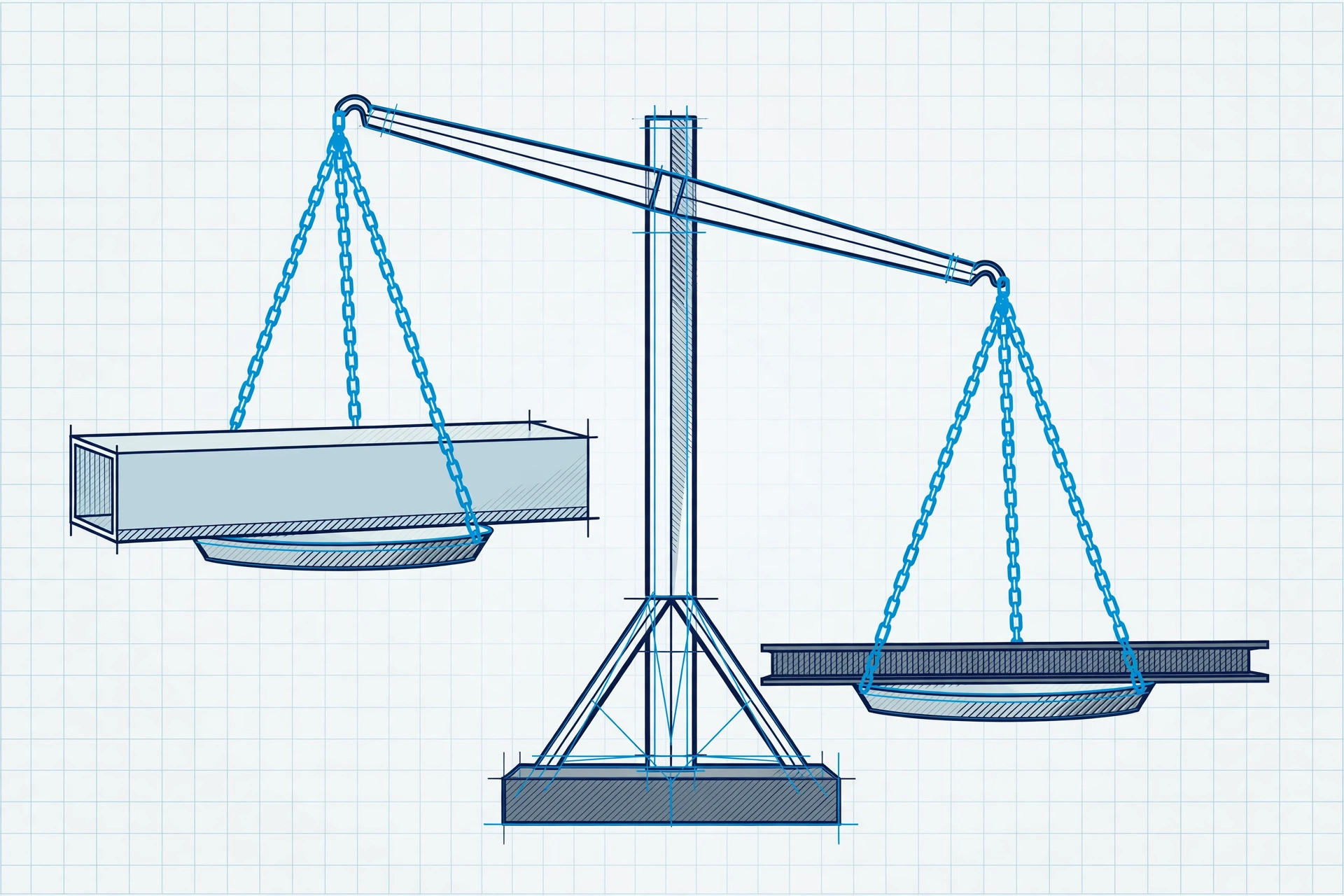
Aluminium weighs about 2700 kilograms per cubic metre against steels 7850, almost exactly a third. Its Youngs modulus is about 69 GPa against steels 200, also almost exactly a third. Those paired thirds produce the comparison that governs most choices: for the same stiffness, an aluminium section needs about three times the second moment of area of a steel one, and at that point the two weigh about the same. Aluminium wins on weight only where the design is strength governed rather than stiffness governed, or where its other properties decide: where sections can be deep and thin walled, as in extrusions, the geometry plays to its strengths and real savings appear, which is why vehicle bodies and aircraft, free to choose deep sections, gain so much from it.
Strength, fatigue and temperature
Aluminium alloys span a wide strength range, from soft pure metal to aerospace alloys rivalling mild steel in yield, though never matching the high strength steels. Two behaviours differ fundamentally. Aluminium has no endurance limit: its fatigue curve never flattens, so every cyclically loaded aluminium part has a finite calculated life, where a steel part below its limit can be treated as immortal. And aluminium loses strength with heat far earlier than steel: common alloys soften appreciably above 150 to 200 degrees C, and in fire an aluminium structure weakens quickly, though it does not burn. Welded aluminium suffers a further local penalty: the heat affected zone of a welded structural alloy can lose a third to a half of its strength, a reduction codes build into joint design and one that surprises engineers arriving from steel.
Corrosion, cost and joining
Aluminium protects itself with a tenacious oxide film and needs no paint in most atmospheres, though it corrodes eagerly when coupled to more noble metals in the presence of water, so isolation from steel and copper alloys is a detailing duty. Steel rusts without protection but is cheap, universally stocked, and joined by welding anywhere. Aluminium costs several times more per kilogram, which its weight saving must repay, extrudes beautifully into complex profiles that steel cannot match, machines fast, and welds well with the right process and filler, though with the strength penalty noted. The verdict by sector tells the story: aircraft, vehicle bodies, boats and portable structures choose aluminium for weight and corrosion; buildings, bridges and heavy plant choose steel for stiffness, cost and fire behaviour. The metals are not rivals so much as specialists, and the comparison table only helps if the governing criterion is named first.