Bolt Preload and Tightening Torque
Preload is the point
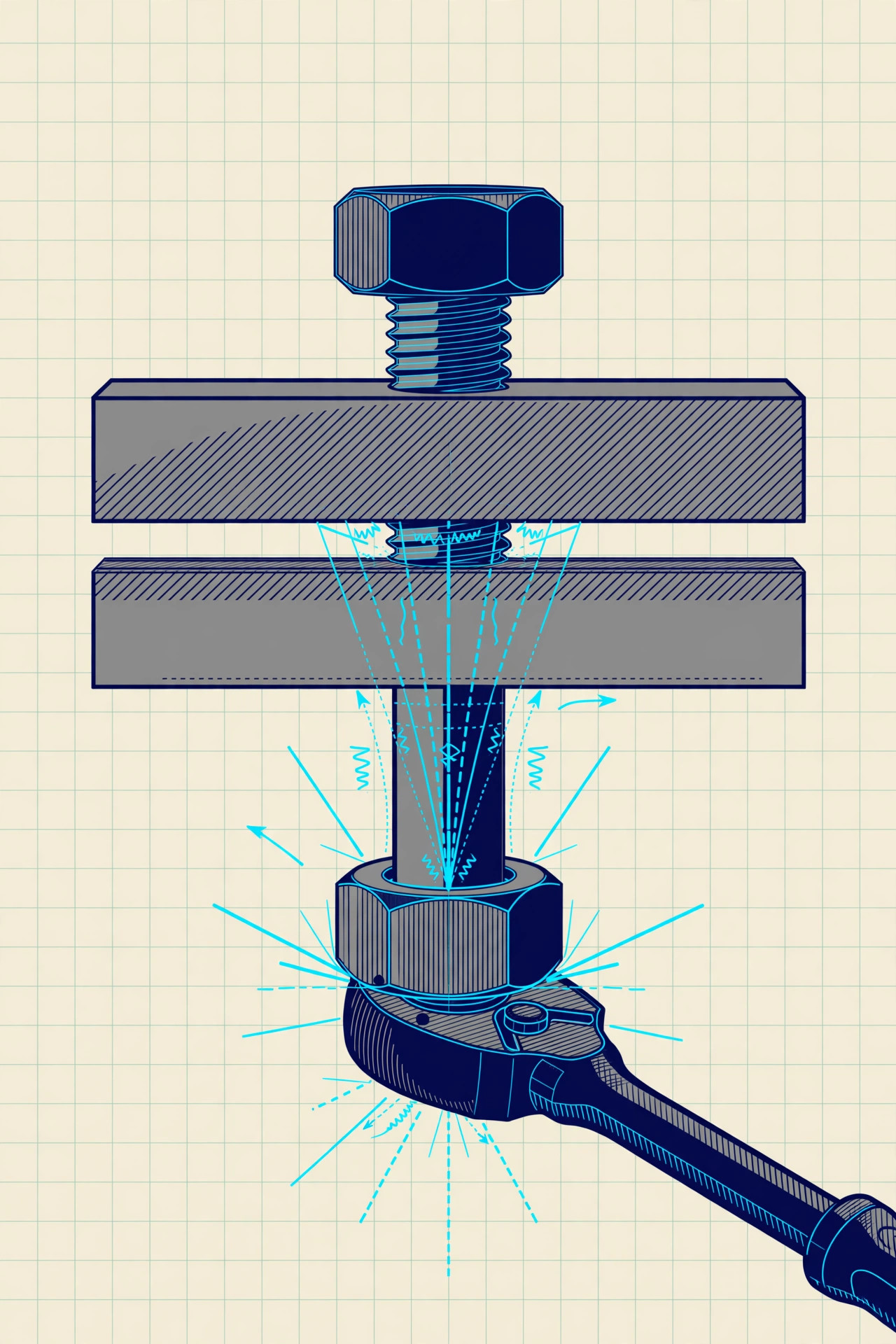
A tightened bolt is a stiff spring stretched by a fraction of a millimetre. That stretch clamps the joint faces together with a force called preload, and it is the preload, not the torque itself, that does every useful job: it stops the joint slipping, keeps it sealed, and, crucially, shields the bolt from fatigue. In a properly preloaded joint the external load mostly relieves compression in the clamped parts rather than adding tension to the bolt, so the bolt sees only a small alternating stress. Lose the preload and the bolt takes the full alternating load and fails by fatigue, usually at the first engaged thread. When engineers argue about tightening, they are really arguing about how reliably a method delivers the intended preload.
Torque is a friction measurement in disguise
The workshop formula, torque equals K times preload times bolt diameter, hides an uncomfortable truth: roughly 90 percent of the applied torque is consumed by friction, half under the nut face and most of the rest in the threads, leaving a tenth to stretch the bolt. The nut factor K captures that friction in one number, about 0.20 for dry steel and 0.11 to 0.15 when lubricated. Because friction varies with surface finish, plating, rust and whether the joint was tightened before, torque control alone scatters preload by around plus or minus 25 percent. The dangerous trap is lubricating a joint whose torque figure assumed dry assembly: the same torque then produces far more preload, sometimes enough to yield or strip the bolt.
Better methods and good practice
Where preload really matters, better methods exist. Torque angle tightening turns the nut a set angle past snug, which controls stretch through the thread pitch and is largely immune to friction; it is standard on engine head bolts, often taken deliberately into yield. Direct tension indicators, load indicating washers and hydraulic tensioners measure or impose the stretch itself. For ordinary work, good practice carries most of the benefit: clean threads in the condition the torque figure assumes, a calibrated wrench used in the middle of its range, tightening in a cross pattern in stages on flanged joints, and never reusing a bolt that was taken into yield. And always ask what preload the joint actually needs: enough to keep faces closed under the worst separating load, with margin, and no more.