The Gear Module System Explained
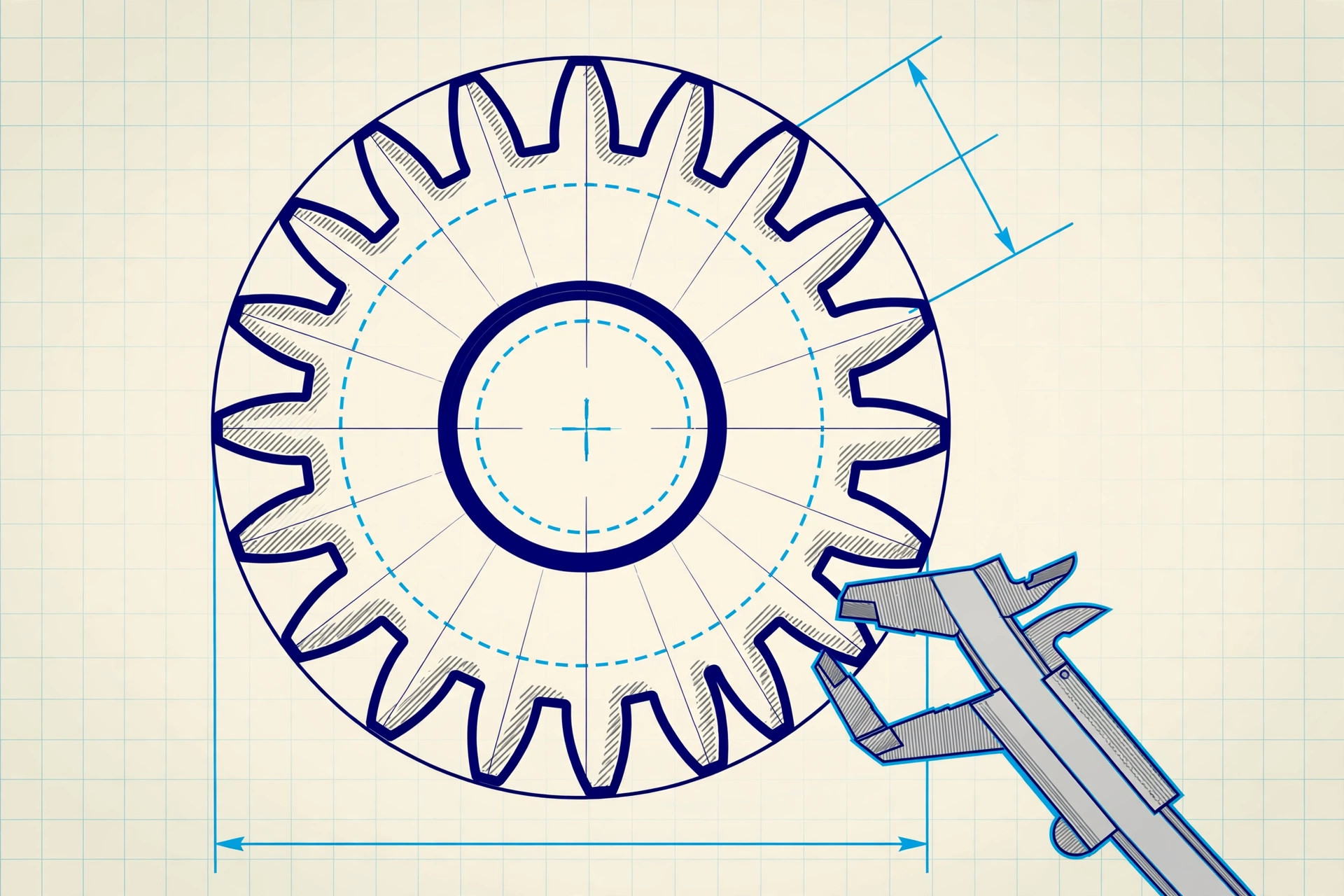
One number sizes the tooth
Metric gears are defined by their module: the pitch diameter in millimetres divided by the number of teeth. A module 2 gear with 30 teeth has a pitch diameter of 60 mm, full stop. Two gears mesh correctly only if they share the same module and pressure angle, because the module sets the size of the tooth itself: the circular pitch, the spacing from tooth to tooth along the pitch circle, is pi times the module. Standard modules come in a preferred series, 1, 1.25, 1.5, 2, 2.5, 3, 4, 5, 6 and upward, and tooling, hobs and cutters are stocked in those sizes. The imperial world uses diametral pitch instead, teeth per inch of pitch diameter, which runs inversely: bigger DP means smaller teeth.
The dimensions that follow
Once module and tooth count are fixed, the standard proportions follow. The addendum, the height of the tooth above the pitch circle, equals one module, so the outside diameter is module times teeth plus 2. The dedendum below the pitch circle is 1.25 modules, leaving clearance at the root. Centre distance between two gears is module times the sum of the teeth, divided by 2, which is why gearboxes are designed around tooth counts: the centre distance must land on a value the housing can provide, and adjusting it means changing teeth, not machining metal to a random dimension. Face width is typically 8 to 12 times the module. Tooth thickness on the pitch circle is half the circular pitch, pi times module over 2.
Choosing a module
Module is a strength choice before it is a size choice. Bigger module means bigger teeth, and bending strength at the tooth root rises steeply with size, roughly with the square of the module for the same face width. The design loop runs: estimate the tangential force from torque and pitch radius, pick a module that keeps root stress acceptable, then check the centre distance and ratio still fit the housing. Small modules give smoother, quieter running and suit instruments and high speed drives; large modules suit slow, heavily loaded machinery. If a gear fails by tooth breakage, the cure is usually a larger module or wider face. If it fails by pitting of the flanks, the cure is harder material or better lubrication, since contact stress depends more on the diameters and materials than on module alone.