How to Read a Motor Nameplate
The plate is the contract
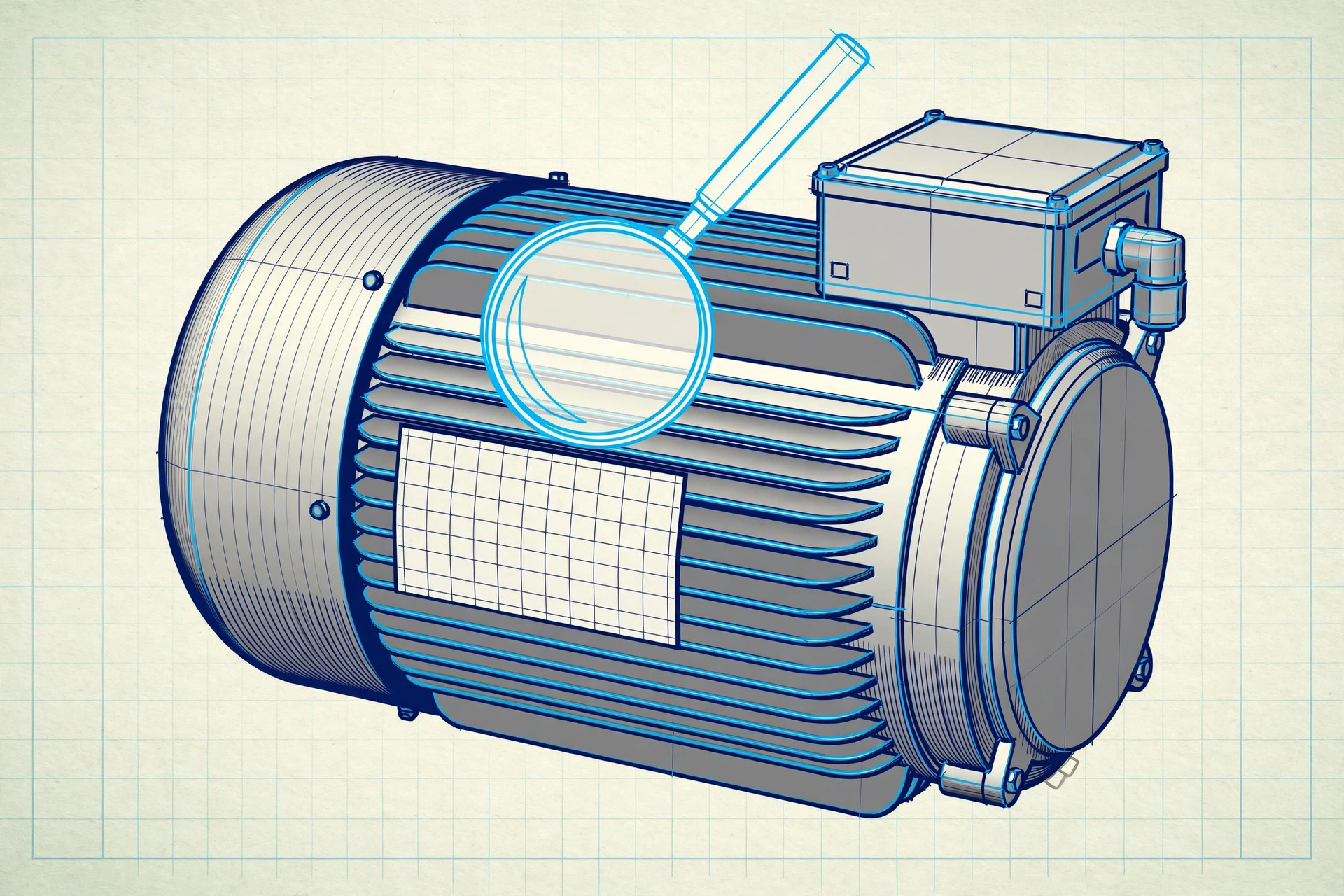
Every motor carries a rating plate stamped with the values the maker guarantees, and it deserves reading before the motor is wired, loaded or blamed. The headline figures are the rated shaft power in kW or hp, the rated speed in rpm at full load, and the supply the motor expects: voltage, frequency and phase. The speed tells you the pole count in disguise: just under 3000, 1500, 1000 or 750 rpm for 2, 4, 6 and 8 pole motors on 50 Hz, always a few percent below the synchronous figure because an induction motor must slip to produce torque. A plate speed of 1440 rpm therefore announces a 4 pole motor, and the full load torque follows from power and speed through the standard relation.
Current, connection and starting
The current figure is the full load current at the stated voltage, the number cable sizing, overload relays and fuses are set from. Many motors show two voltages, such as 230 and 400 V, with the connection symbols delta and star beside them: the motor is connected in delta on the lower voltage and star on the higher, and getting this backwards either starves the motor or saturates and burns it. The plate may also state a starting current multiple or a code letter, since direct on line starting draws six to eight times full load current briefly. Power factor and efficiency at full load appear on better plates: both sag at part load, which is why a grossly oversized motor wastes energy and worsens the supply power factor even while loafing.
Duty, insulation and protection
Three quieter lines matter for reliability. The duty rating, S1 for continuous running, S2 or S3 for short time or intermittent duty, limits how long the rating may be applied; a hoist motor rated S3 will overheat if run continuously at nameplate power. The insulation class, commonly F, sets the maximum winding temperature the materials tolerate, and every 10 degrees above it roughly halves insulation life. The IP code rates protection against dust and water: IP55 suits most industrial floors, while open motors belong in clean dry rooms. Finally the frame size and mounting code govern whether the motor physically fits the machine. Reading the plate takes a minute and prevents the three classic errors: wrong connection, wrong overload setting, and asking a motor for a duty it was never built to give.