Motor Starting Current Explained
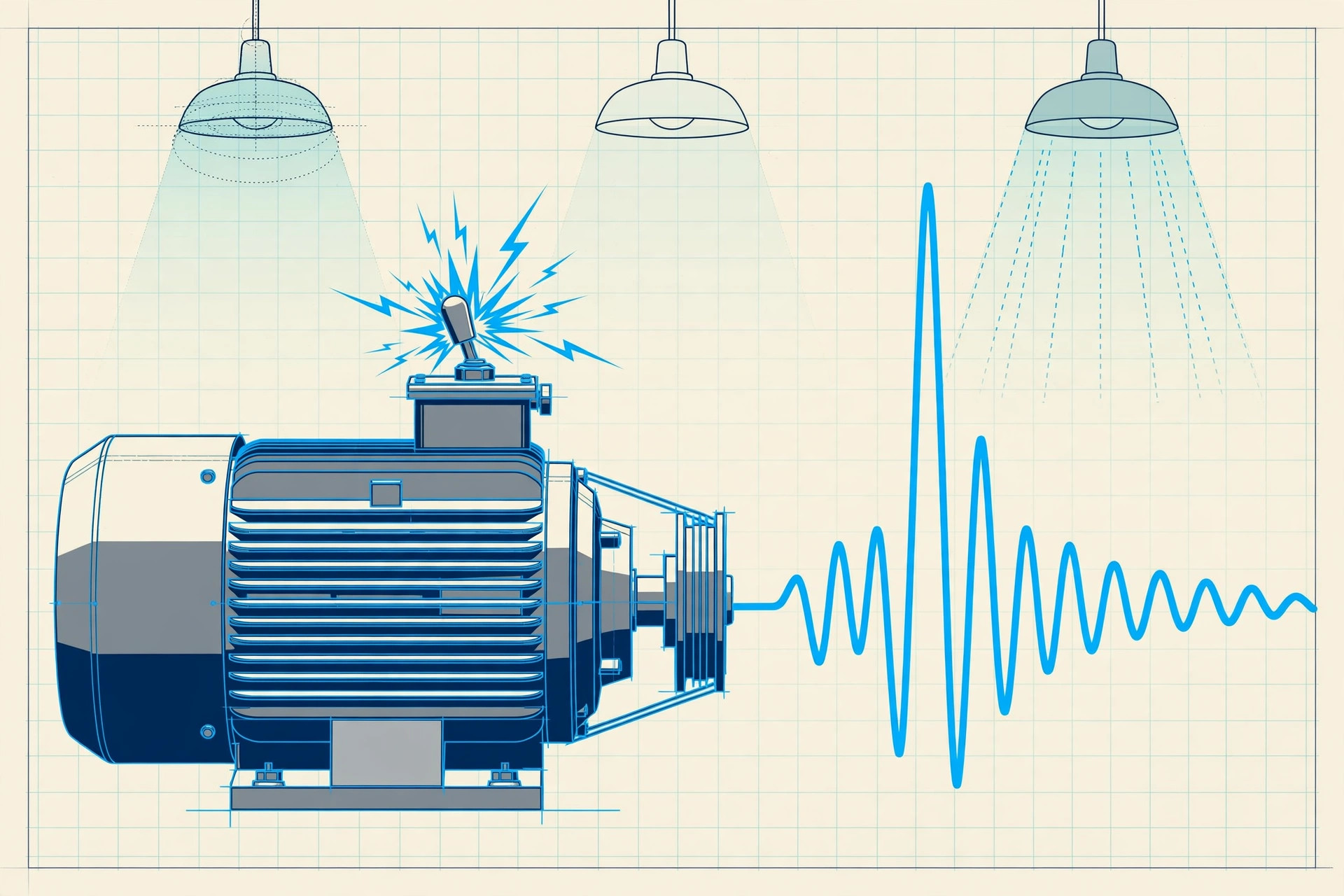
A motor at standstill is nearly a short circuit
An induction motor produces torque because the rotor lags the rotating field, the slip. At the instant of switch on the rotor is stationary, the slip is total, and the motor behaves almost like a transformer with a shorted secondary. Current rushes in at six to eight times the full load figure, limited mainly by the motors leakage reactance. As the rotor accelerates the current falls along a curve to the running value, reaching it only near full speed. The whole event lasts from a fraction of a second for a small fan to many seconds for a high inertia load like a centrifuge or a loaded conveyor. The nameplate current, and the motor current calculator, describe the end of that story, not its violent beginning.
What the surge stresses
Three systems feel the surge. The supply feels a voltage dip as the starting current drags through the supply impedance: lights flicker, contactors can drop out, and other drives may trip, which is why supply authorities limit how large a motor may be started direct on line. The electrical protection feels it as a design puzzle: fuses and breakers must ride through the start without operating, yet still protect against genuine faults, which is why motor rated fuses and D curve breakers exist. The machine feels it as torque shock: the starting torque, one and a half to two and a half times full load torque, hammers couplings, belts and gearboxes at every start, and a drive started fifty times a day ages mechanically far faster than one started twice.
Taming the start
Where the surge is a problem, the starter earns its place. A star delta starter begins with the windings in star, cutting current and torque to a third, then switches to delta for running: cheap and effective where the load can start on reduced torque. A soft starter ramps the voltage electronically, trading a longer, gentler start for a current of two to four times full load. A variable speed drive does the job best of all, starting at full torque with current barely above full load, at the highest price. Autotransformer starters fill the historical middle ground. The choice follows the load: fans and pumps, whose torque falls with speed squared, start kindly and suit every method; loaded crushers and compressors that need breakaway torque forgive nothing and often justify the drive.