Pressure Units Explained
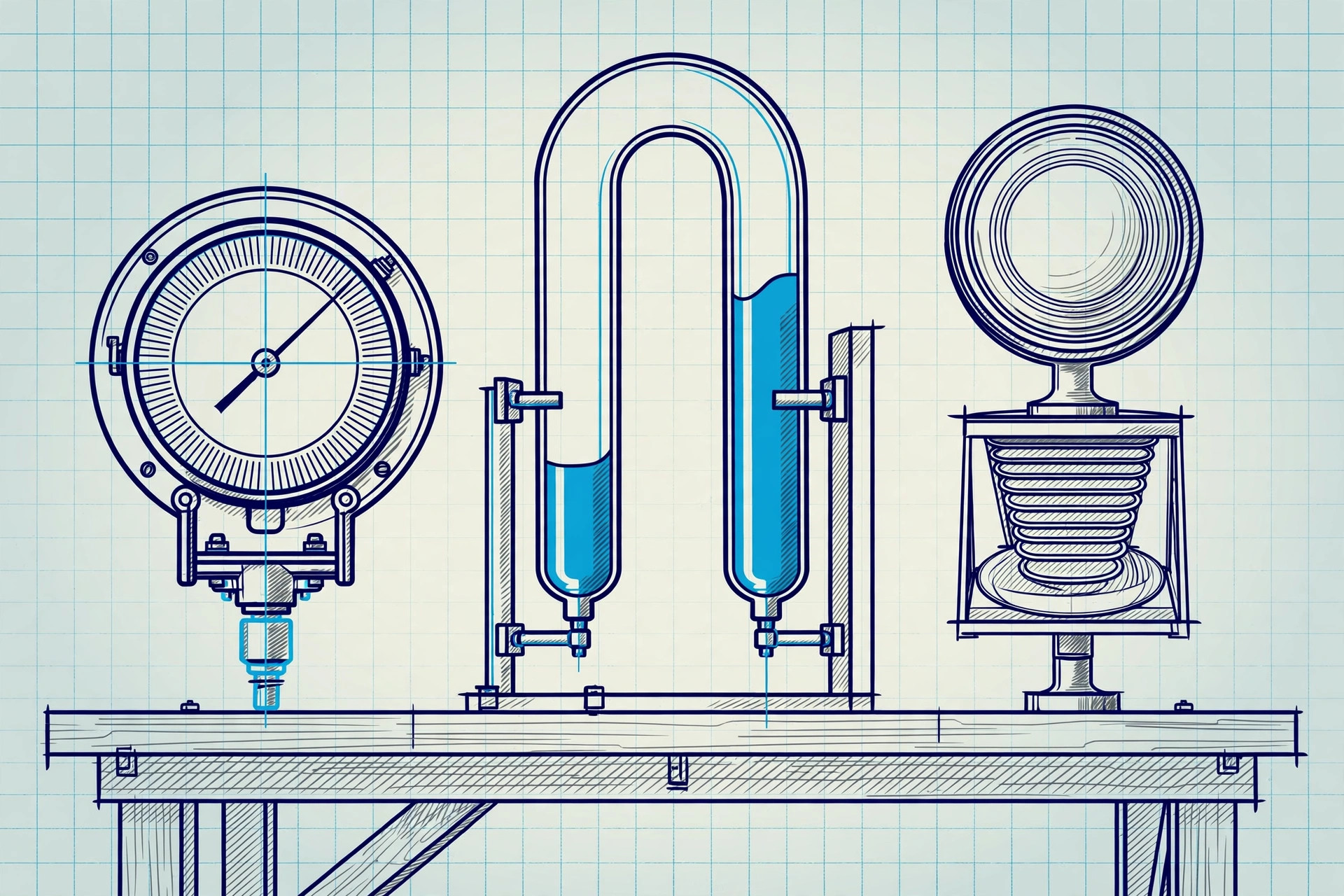
One quantity, many dialects
Pressure is force over area, and the SI unit, the pascal, is one newton per square metre. It is a small unit: atmospheric pressure is about 101,325 of them, so daily work uses kilopascals and megapascals, or steps outside SI entirely. The bar, defined as exactly 100,000 pascals, sits conveniently near one atmosphere and dominates European plant practice. The pound per square inch rules American workshops, where a car tyre takes about 32 psi and a workshop airline about 100. The standard atmosphere itself, 101,325 pascals exactly, survives in physics and aviation. Each industry keeps the unit in which its gauges, tables and habits grew up, and fluency between them is a working skill, not pedantry.
Mercury columns and water columns
Before electronic sensors, pressure was read as the height of a liquid column it could support, and the units remain. Millimetres of mercury measure blood pressure and vacuum: a healthy 120 over 80 is in mmHg, and a perfect vacuum is 760 of them below atmosphere. Inches of mercury set aircraft altimeters in some countries. Water columns, in millimetres, inches or millibars equivalence, measure the small pressures of ventilation and gas work, where a whole duct system may run on a few hundred pascals. These units carry a hidden assumption: the height depends on the liquids density, so mercury columns are defined at a standard temperature and gravity. The pressure converter on this site uses the standard defined values.
Gauge, absolute and the classic blunder
Two references divide all pressure readings. Absolute pressure is measured from a perfect vacuum. Gauge pressure is measured from the surrounding atmosphere, which is what almost every gauge on a plant actually reads, and what a tyre pressure is. The two differ by about 1 bar, trivial at 200 bar of hydraulics and catastrophic in a vacuum calculation or a gas law sum, which demand absolute values. Datasheets are not always careful about which they mean, and the suffixes, bara and barg, psia and psig, exist to force the distinction. Before converting units, establish the reference: converting a gauge reading as if it were absolute introduces an error of one atmosphere, which at low pressures is larger than the reading itself. It is the pressure worlds equivalent of a decimal point slip, and just as unforgiving.