Three Phase Power Explained
Three supplies in one
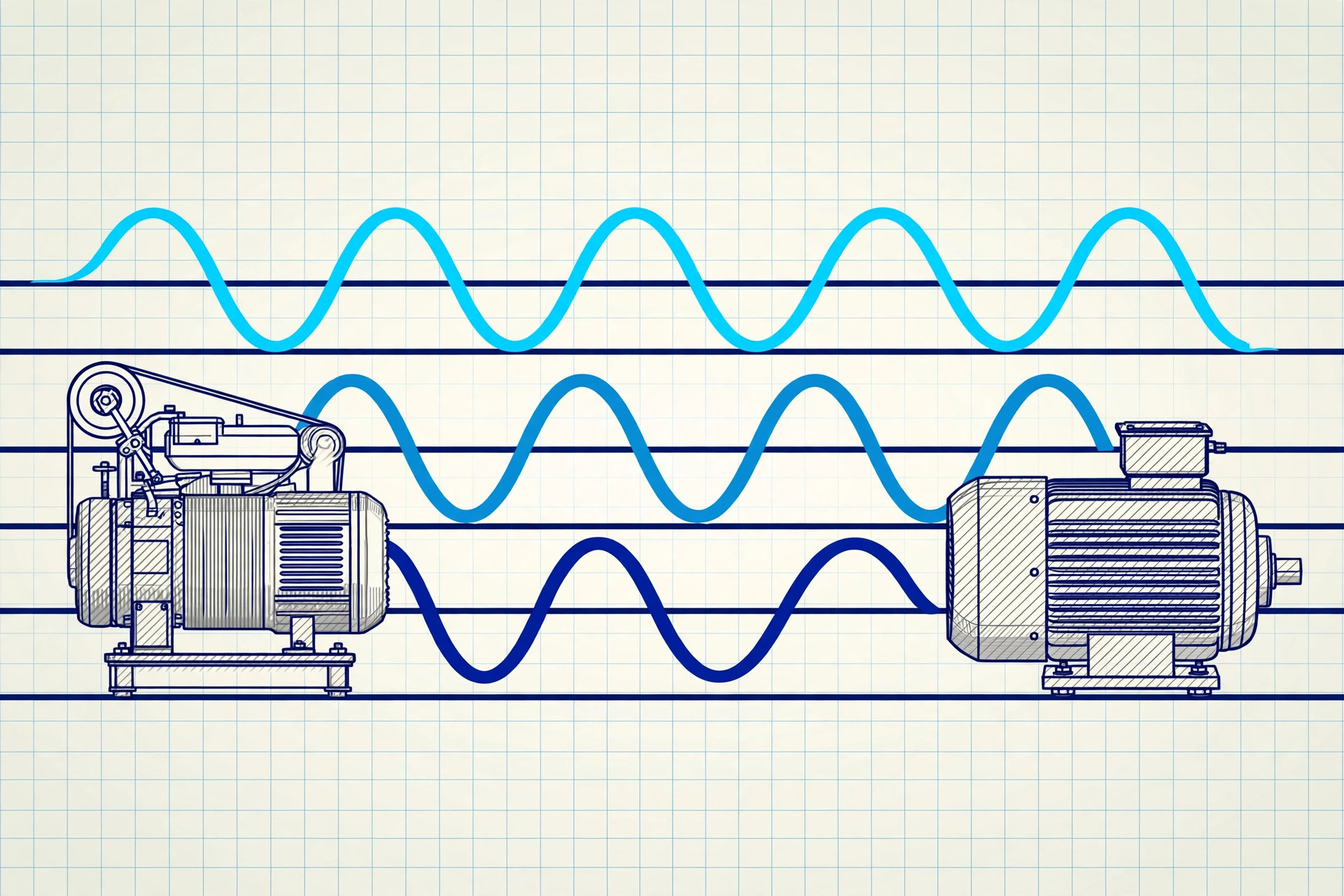
A three phase system is three AC supplies of equal voltage, spaced a third of a cycle apart, delivered over three or four wires. Invented in the late 1880s, it won because it does two things single phase cannot. It transmits a given power with less copper: for the same losses, a three phase line moves half as much again as a single phase line of the same voltage. And its total power flow is constant rather than pulsating, so three phase motors run smoothly, start themselves with a rotating field, and need no starting winding tricks. The phases are generated in the alternator by three windings spaced 120 degrees apart, and balanced loads draw three equal currents with the same spacing, summing to zero in the neutral.
Star, delta and the root three
Loads and sources connect in star, with a common neutral point, or in delta, in a closed triangle. The two give different relations between line and phase quantities. In star, the line voltage is root three times the phase voltage, which is why a 400 volt three phase supply offers 230 volts from any line to neutral: the familiar pair of numbers is one system seen two ways. In delta, the line current is root three times the phase current. The power formula absorbs whichever arrangement you have: total power is root three times line voltage times line current times power factor, valid for any balanced load, star or delta. That root three is the most misplaced factor in practical electrical work, and the three phase calculator exists largely to keep it straight.
Balance and its breakdown
Everything tidy about three phase assumes balance. Unbalanced loads shift the neutral point, overvolt the lightly loaded phases and undervolt the heavy ones, and leave current flowing in the neutral that the tidy theory says should not exist. Single phase loads on a three phase system are therefore spread across phases as evenly as the designer can manage. Modern electronic loads add a subtler imbalance: their harmonic currents, particularly the third harmonic, add in the neutral instead of cancelling, which is why neutrals in offices full of computers are sometimes sized larger than the phase conductors. For the balanced core case, though, the system is beautifully behaved, and the check is quick: measure the three line currents, and if they match within a few percent, the root three arithmetic describes your installation faithfully.