Torque Units Explained
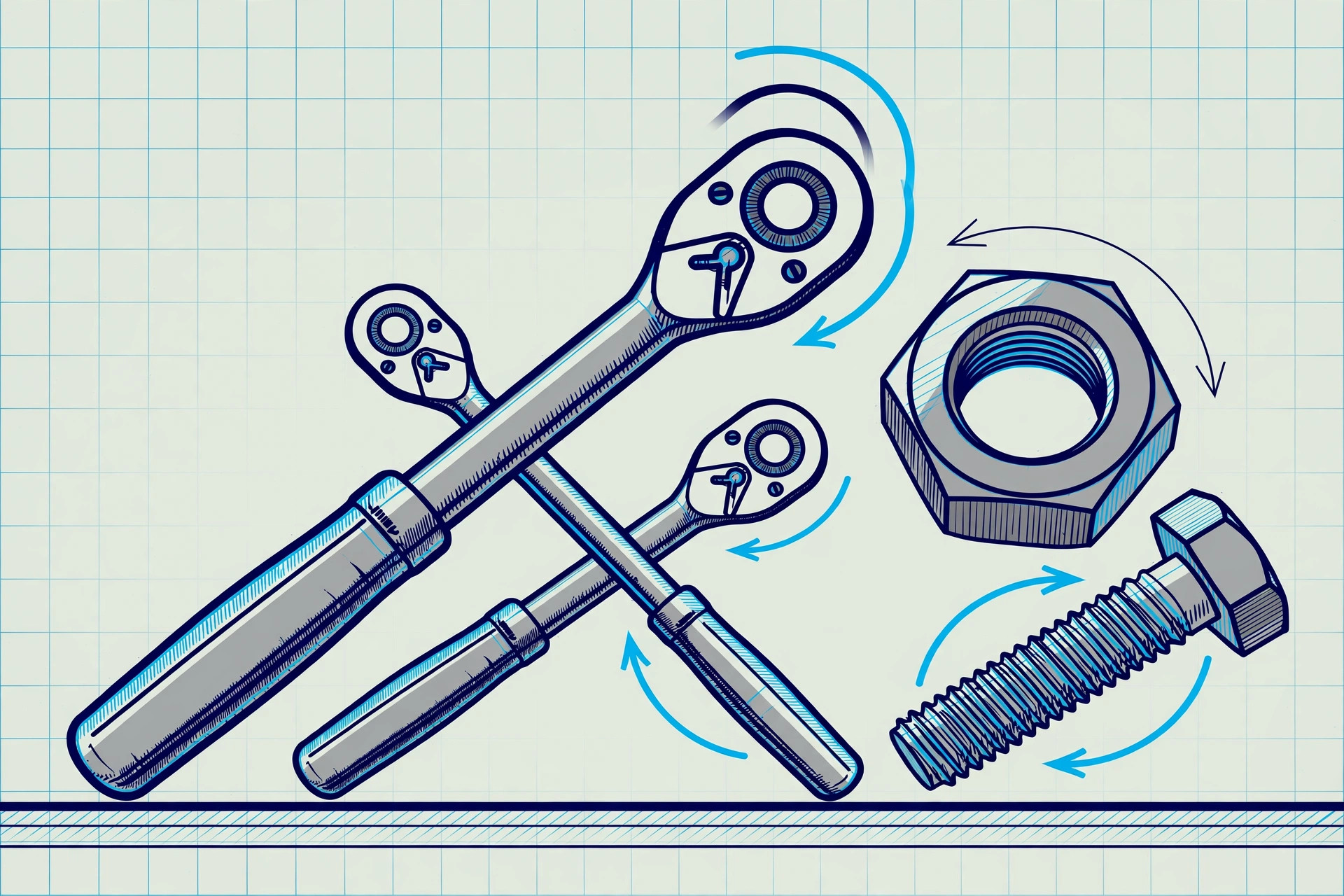
Torque speaks several languages
Torque is force times lever arm, and its units name both halves. The newton metre is the SI standard, used by European and Japanese industry and by science. The pound foot, force in pounds on a lever in feet, rules American workshops and car culture. The pound inch serves small fasteners and instruments, where torques are delicate. The kilogram metre survives on older Japanese and European machinery, a gravitational unit in which the force is the weight of a kilogram. A torque wrench bought in one country and a manual written in another is the everyday setting for conversions, and the stakes are real: an undertorqued wheel or an overtorqued head bolt are both failures scheduled, not avoided.
The factors and the traps
One pound foot is 1.3558 newton metres. One newton metre is 0.7376 pound feet. The numbers are close enough to unity to invite the deadliest shortcut in the workshop, treating them as equal, which undertorques or overtorques by more than a third. The second trap is the factor of twelve: pound inches are a twelfth of pound feet, and a specification of 120 pound inches read as 120 pound feet applies twelve times the intended torque, enough to strip threads or snap a stud. The third trap is subtler: the kilogram metre converts at 9.80665, near enough to ten to tempt rounding that a critical joint should not accept. The torque converter on this site exists because these three traps between them account for a steady toll of broken fasteners.
Torque is not energy
A pedantic point with practical teeth: the newton metre of torque is dimensionally the same as the joule of energy, yet they are different quantities and never interchangeable. Torque is a turning moment, force times a perpendicular distance, and becomes energy only when multiplied by the angle turned, in radians. A bolt tightened to 100 Nm has not absorbed 100 joules; the work done depends on how far it rotated while the torque rose. Keeping the distinction straight matters when moving between tightening specifications, motor ratings, where torque times speed gives power, and energy calculations. In writing, some engineers use Nm for torque and J for energy strictly, and reserve the bare unit for neither. It is a small discipline that prevents a genuine category error.